

Choosing a vehicle for daily commuting involves more than comparing horsepower or exterior styling. Drivers who spend significant time traveling to and from work often prioritize fuel efficiency, ride comfort, interior usability, and long term reliability. These factors directly influence how practical a car feels during everyday driving.
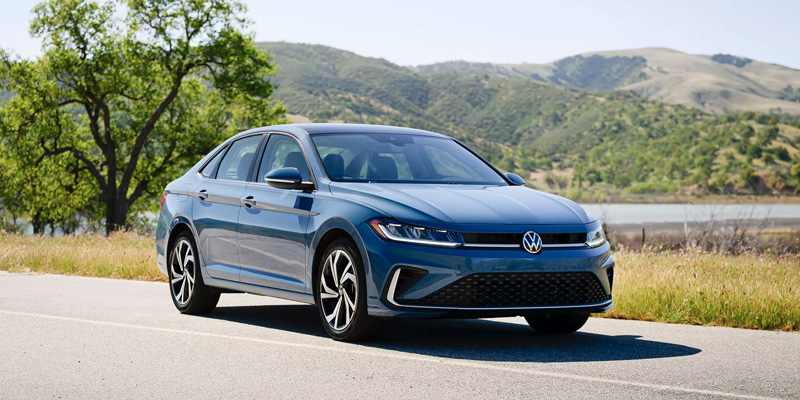
The Volkswagen Jetta is frequently compared with other compact sedans such as the Honda Civic, Toyota Corolla, Hyundai Elantra, and Mazda3 because these vehicles occupy the same commuter focused segment. When shoppers research whether the Volkswagen Jetta is a good commuter car, they are usually evaluating how the vehicle’s engineering decisions influence fuel consumption, driver comfort, and overall ownership practicality.
Understanding how the Volkswagen Jetta approaches these areas helps drivers compare it more effectively with other compact sedans commonly used for daily commuting.
How the Volkswagen Jetta Turbocharged Engine Supports Commuter Fuel Efficiency
Many drivers researching commuter cars ask which compact sedan delivers strong fuel efficiency without sacrificing everyday performance. One reason the Volkswagen Jetta performs well in this category is its turbocharged engine design.
A turbocharged engine uses exhaust driven turbines to force additional air into the engine’s combustion chamber. By increasing the amount of oxygen available during combustion, the engine can generate more power from a smaller displacement while maintaining efficient fuel consumption.
The Volkswagen Jetta turbocharged engine is designed to deliver strong low speed torque, which is particularly useful during commuting conditions. Stop and go traffic, merging onto highways, and steady speed cruising all benefit from an engine that produces usable power without requiring high engine speeds.
For commuters comparing compact sedans, this design creates several practical advantages.
• Efficient fuel consumption during steady highway cruising
• Responsive acceleration when merging or changing lanes
• Lower engine workload during everyday driving conditions
Compared with naturally aspirated engines often found in competing compact sedans, turbocharged engines can maintain efficiency across a wider range of driving situations.
Suspension Design and Highway Comfort During Daily Drives
Ride comfort is another factor that heavily influences commuting satisfaction. Drivers who spend long periods on highways or urban roads often ask which compact sedans provide the most comfortable driving experience.
The Volkswagen Jetta suspension system is engineered to balance road isolation with stable handling. Suspension components such as springs, dampers, and control arms work together to absorb road irregularities while keeping the vehicle stable during cornering and braking.
Suspension tuning plays an important role in reducing driver fatigue during long commutes. When a vehicle’s suspension absorbs road imperfections effectively, fewer vibrations are transmitted into the cabin. This allows drivers to remain comfortable even when traveling across uneven pavement or highway expansion joints.
The Volkswagen Jetta suspension design also contributes to predictable steering behavior. Stable steering response is important for highway driving because it allows the vehicle to track smoothly at higher speeds while requiring fewer constant corrections from the driver.
For commuters who drive long distances regularly, these characteristics make a noticeable difference in overall comfort.
Interior Ergonomics and Driver Focused Cabin Design
Interior design is another area where compact sedans differ significantly in everyday usability. Many drivers comparing vehicles for commuting want to know whether the interior layout will remain comfortable during repeated daily drives.
The Volkswagen Jetta interior layout emphasizes driver centered ergonomics. Ergonomics refers to the way controls, seating positions, and visibility are designed to support natural body movement and reduce physical strain.
In the Volkswagen Jetta cabin, the seating position, steering wheel placement, and dashboard layout are designed to allow drivers to reach key controls without excessive movement. Maintaining a natural driving posture helps reduce fatigue during longer commutes.
Interior visibility is also an important factor for commuting in busy traffic environments. Clear sightlines through the windshield and side windows help drivers monitor surrounding vehicles and react quickly to changing road conditions.
Several interior factors contribute to commuter comfort when evaluating compact sedans.
• Seating support and cushion design
• Steering wheel adjustability and driving position
• Placement of frequently used controls
• Cabin noise levels during highway travel
When these elements are designed effectively, drivers experience less physical strain during daily travel.
Driver Assistance Technology for Traffic and Highway Commuting
Modern compact sedans increasingly include driver assistance systems that help drivers manage traffic conditions more comfortably. Many commuters researching vehicles ask how these technologies function during everyday driving.
Driver assistance systems use sensors, cameras, and radar technology to monitor surrounding traffic conditions. When paired with intelligent software systems, these technologies can assist drivers with maintaining safe following distances, staying centered in their lane, and monitoring nearby vehicles.
The Volkswagen Jetta driver assistance features can support commuting in several ways.
Adaptive cruise control can automatically adjust vehicle speed to maintain a safe following distance in highway traffic. This reduces the need for constant manual acceleration and braking during heavy traffic conditions.
Lane keeping systems monitor road markings and provide gentle steering assistance if the vehicle begins to drift outside its lane. This technology helps drivers maintain proper lane positioning during longer highway drives.
Blind spot monitoring systems detect vehicles traveling in adjacent lanes and provide alerts when a vehicle enters the driver’s blind spot.
For commuters traveling through dense traffic or long highway routes, these technologies can reduce driver workload and improve overall driving confidence.
Comparing the Volkswagen Jetta With Other Compact Commuter Sedans
When drivers compare the Volkswagen Jetta with competitors such as the Honda Civic, Toyota Corolla, Hyundai Elantra, and Mazda3, several factors tend to influence their final decision.
Fuel efficiency is often the first comparison point because it directly affects long term commuting costs. Compact sedans are designed to deliver strong fuel economy, but engine design, transmission tuning, and vehicle weight can influence real world efficiency.
Comfort is another factor that separates vehicles within this segment. Suspension design, seat quality, and cabin noise levels all affect how comfortable a vehicle feels during extended driving.
Technology features and driver assistance systems also play an increasing role in commuting convenience. Vehicles equipped with adaptive cruise control, lane assistance, and modern infotainment systems can make daily travel easier to manage.
Drivers comparing compact sedans typically evaluate several ownership considerations.
• Fuel economy during daily driving
• Interior comfort during longer commutes
• Reliability and long term durability
• Driver assistance technology availability
Understanding how the Volkswagen Jetta addresses these areas helps drivers determine whether it aligns with their commuting needs.
For many commuters, the Jetta’s combination of turbocharged efficiency, balanced ride comfort, and driver focused interior design makes it a strong option within the compact sedan segment.
Connect with us

