Blog / Troy Volkswagen Dealer

2026 Volkswagen Atlas Cross Sport vs Kia Telluride: Size and Performance Comparison

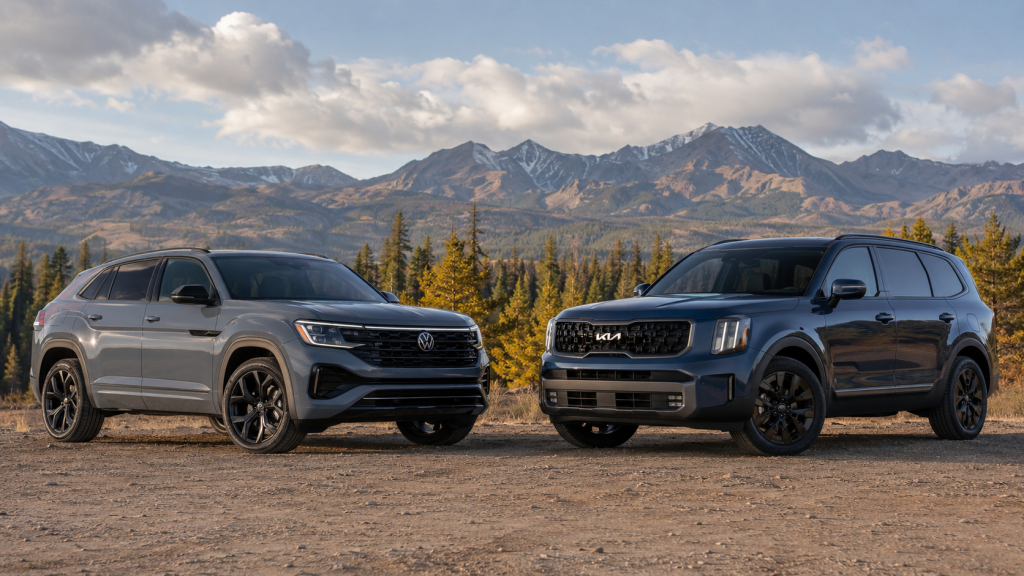
2026 Volkswagen Atlas Cross Sport vs Kia Telluride

The 2026 Volkswagen Atlas Cross Sport vs Kia Telluride comparison starts with a major structural difference because these SUVs approach passenger space, cargo packaging, and highway driving in completely different ways. The Telluride focuses on three row flexibility and higher passenger capacity, while the Volkswagen Atlas Cross Sport uses a two row layout that changes cabin spacing, cargo floor length, and vehicle proportions. Shoppers researching midsize SUVs are not only comparing dimensions or towing numbers anymore. They are trying to understand how SUV layout changes road trip comfort, winter drivability, parking ease, and cargo organization during daily ownership.

Atlas Cross Sport vs Telluride Size Differences Start With SUV Layout

One of the most common shopper questions asks whether the Atlas Cross Sport is bigger than the Kia Telluride. The answer depends on how SUV size is being measured because overall length, passenger packaging, and cabin layout create very different driving impressions.

The 2026 Volkswagen Atlas Cross Sport removes the third row entirely, which shortens the rear cabin structure and changes how interior space is distributed. Instead of splitting cabin length across three seating rows, Volkswagen pushes more passenger spacing into the second row while also extending the rear cargo floor. That changes how the SUV feels during parking, lane changes, and highway travel.

The Kia Telluride uses a traditional three row SUV structure. The additional seating row increases passenger flexibility, though it also changes cargo packaging and rear overhang proportions. During tighter parking situations, the longer rear structure can feel larger from the driver seat because more vehicle length extends behind the rear axle.

The Atlas Cross Sport structure changes several driving characteristics:

• Shorter rear packaging creates easier parking visibility
• Two row cabin spacing creates wider rear passenger comfort positioning
• Reduced rear overhang changes turning feel during urban driving
• Cargo floor length increases behind the second row

The Telluride layout prioritizes passenger count first. The Atlas Cross Sport prioritizes passenger spacing and cargo accessibility first. That difference changes the entire ownership feel of these SUVs.

Why Two Row and Three Row SUVs Use Cargo Space Differently

Cargo space discussions usually stop at total cubic feet, but that does not explain how SUVs organize storage volume. Shape matters just as much as measurement.

The Atlas Cross Sport uses a longer uninterrupted cargo floor because there is no folded third row structure underneath the rear compartment. That creates flatter cargo loading geometry and allows larger items to sit lower and farther forward inside the SUV. During grocery loading, luggage stacking, or sports equipment transport, flatter floor design changes how usable the rear cargo area feels.

The Telluride divides its rear structure across multiple passenger configurations. When the third row remains upright, rear cargo depth becomes shorter because more cabin length is reserved for passenger seating. Folding the third row increases cargo volume, though the cargo floor geometry changes because seating hardware still occupies lower floor structure.

This becomes noticeable during family travel situations:

• The Atlas Cross Sport supports longer cargo items behind the second row without folding seats
• The Telluride supports more passengers without sacrificing second row comfort
• Cargo stacking height changes because floor depth differs between layouts
• Rear hatch usability changes based on cargo floor height and loading reach

Road trip comfort also changes between these SUVs because passenger spacing and cargo organization directly impact cabin clutter. Families carrying strollers, coolers, sports bags, or luggage may notice that the Atlas Cross Sport separates passengers and cargo more naturally due to its two row packaging structure.

How Turbocharged Power Delivery Changes Highway Driving and Towing

Which SUV feels stronger during highway driving depends less on horsepower and more on how engine torque arrives during acceleration.

The 2026 Volkswagen Atlas Cross Sport uses a turbocharged engine configuration that produces stronger low RPM torque delivery. Turbocharged engines compress incoming air before combustion, allowing the engine to create higher torque output earlier in the powerband. During highway merging or passing situations, this changes throttle response because the SUV reaches usable acceleration sooner without requiring higher engine RPM.

The Kia Telluride uses a naturally aspirated V6 configuration. Naturally aspirated engines build acceleration more progressively because engine output rises more linearly with RPM. Some drivers prefer this smoother throttle buildup because acceleration feels steadier during daily commuting.

These engine differences become more noticeable during towing.

The Atlas Cross Sport turbocharged setup changes towing response in several ways:

• Lower RPM torque reduces aggressive downshifting during hills
• Turbocharged airflow creates stronger mid range acceleration while carrying load
• Earlier torque delivery changes trailer launch feel from stoplights
• Highway passing requires less throttle travel

The Telluride V6 delivers towing power differently:

• Acceleration builds more progressively during throttle input
• Higher RPM operation creates steadier linear engine response
• Longer throttle sweep changes trailer acceleration feel
• Engine sound and RPM rise feel more traditional during towing

Neither approach automatically fits every driver. The Atlas Cross Sport focuses on stronger low speed torque response. The Telluride focuses on smoother naturally aspirated acceleration delivery.

What AWD Calibration and Suspension Tuning Mean During Michigan Winters

Shoppers researching midsize SUVs in Michigan frequently ask which SUV handles snow better, though drivetrain hardware alone does not answer that question. AWD calibration and suspension tuning shape winter road control just as much as tire grip.

The Volkswagen Atlas Cross Sport AWD setup continuously monitors wheel speed, throttle input, steering angle, and traction transfer. When front wheel slip begins, the AWD system redirects torque across the drivetrain to stabilize forward movement. This changes how throttle response feels during wet roads, slush, or packed snow because power transfer reacts before large traction loss develops.

Suspension tuning also changes winter road stability. The Atlas Cross Sport suspension calibration feels more planted during highway transitions because body movement remains tighter during steering corrections. During windy winter highway driving, this reduces larger body sway movements that can increase steering correction frequency.

The Telluride suspension prioritizes softer ride absorption. Uneven pavement and broken winter roads may feel smoother because suspension travel absorbs impacts more gradually. That softer calibration can create a more isolated ride feel during rough pavement driving.

Winter drivability differences become easier to understand when separating drivetrain management from ride tuning:

• AWD calibration controls torque transfer during traction loss
• Suspension tuning controls body movement during steering input
• Tire compound controls actual road grip during freezing temperatures
• Vehicle weight transfer changes braking and cornering stability

The Atlas Cross Sport focuses more heavily on composed directional response. The Telluride emphasizes softer ride isolation across rough pavement.

Which SUV Layout Fits Different Family and Travel Priorities

The final decision between the 2026 Volkswagen Atlas Cross Sport and Kia Telluride comes down to passenger priorities, cargo organization, and driving preference.

Families regularly carrying seven or eight passengers will likely lean toward the Telluride because third row accessibility changes carpooling and group travel flexibility. The Telluride structure supports larger passenger counts without requiring second row compromise.

The Atlas Cross Sport fits a different type of SUV shopper. Drivers prioritizing second row comfort, larger uninterrupted cargo space, easier maneuverability, and more responsive turbocharged acceleration may prefer the Volkswagen layout. The shorter rear structure and flatter cargo design create a very different ownership feel during commuting, parking, and highway travel.

The biggest difference between these SUVs is not size alone. It is packaging philosophy.

The Telluride organizes its structure around maximum passenger flexibility. The Atlas Cross Sport organizes its structure around passenger spacing, cargo usability, and composed road response.

That distinction shapes nearly every part of daily ownership.
Posted in:

Related Posts

2026 Volkswagen Golf GTI

Is the 2026 Volkswagen Golf GTI Worth It for Daily Driving in Michigan?

The 2026 Volkswagen Golf GTI daily driver discussion keeps growing because more Michigan drivers want a commuter car that feels responsive year round without sacrificing comfort or winter stability. That balance is difficult for most sporty compact cars to achieve. Some focus heavily on handling and ride stiffness while others prioritize fuel economy so aggressively that acceleration and steering response feel disconnected. The Golf GTI approaches daily driving differently because its chassis tuning, turbocharged engine calibration, hatchback structure, and front wheel drive layout were engineered to support both commuter usability and responsive road feel at the same time. Why the Golf GTI Feels Different From a Standard Commuter Hatchback One of the most common shopper questions asks what makes the GTI different from a regular Golf. The answer starts with chassis calibration. A chassis is the structural foundation connecting suspension geometry, steering response, weight distribution, and body rigidity. The 2026 Volkswagen Golf GTI uses tighter suspension calibration, quicker steering ratios, upgraded braking hardware, and revised drivetrain tuning compared with a standard commuter hatchback. Those changes affect how the car rotates during corners, how quickly steering input transfers through the front wheels, and how stable the vehicle feels during lane transitions. Most commuter hatchbacks prioritize soft steering and slower body movement because the goal centers around comfort first. The GTI changes that formula by tightening body control while still maintaining enough ride compliance for long distance commuting. This changes daily driving in several ways: more • Steering input feels more immediate during lane changes • Body movement stays flatter during highway ramps • Braking response feels firmer during stop and go traffic • Compact wheelbase dimensions simplify parking and city driving The GTI also uses a hatchback structure rather than a traditional sedan layout. A hatchback integrates the cargo area directly into the cabin instead of separating it with a trunk wall. That changes cargo accessibility, rear visibility, and cabin flexibility during commuting or travel. The result is a commuter car that feels more connected to driver input without turning daily driving into a harsh or exhausting experience. How Turbocharged Torque Delivery Changes Daily Driving Does the GTI feel fast during normal commuting? That sensation comes more from torque delivery than peak horsepower numbers. Torque measures rotational pulling force. The 2026 Volkswagen Golf GTI turbocharged engine generates strong torque at lower engine speeds because turbochargers compress incoming air before combustion. Increasing airflow density allows the engine to produce stronger acceleration earlier in the RPM range. This matters during commuting because most drivers spend their time between low and mid RPM operation rather than full throttle acceleration. The GTI turbocharged setup changes commuter driving characteristics: • Highway merging requires less throttle travel • Stoplight acceleration feels stronger at lower engine speed • Passing slower traffic requires fewer transmission downshifts • Mid range acceleration responds more quickly during traffic gaps Fuel economy discussions surrounding turbocharged engines are frequently oversimplified. Turbocharged engines can remain efficient during lighter throttle operation because the engine does not need large displacement to create usable acceleration. During aggressive acceleration, however, boost pressure increases fuel demand. That means commuting style directly affects fuel usage: • Smooth throttle input allows the GTI to stay efficient during commuting • Aggressive boost usage increases fuel consumption more rapidly • Lower RPM cruising supports quieter highway driving • Earlier torque delivery reduces engine strain during merging situations The GTI feels responsive during everyday driving because usable acceleration arrives earlier instead of waiting for higher engine speed. Why Front Wheel Drive and Winter Tires Matter More Than AWD in Snow One of the biggest misconceptions surrounding winter driving assumes AWD automatically creates superior snow traction. Tire grip matters far more. The 2026 Volkswagen Golf GTI uses a front wheel drive layout where engine weight sits primarily above the driven wheels. During snow driving, that front axle weight loading helps the tires maintain stronger contact pressure against slippery surfaces. Traction develops through tire compound flexibility and tread design. Winter tires remain softer in freezing temperatures, allowing the tire surface to conform more effectively against snow and ice textures. Summer or all season compounds harden in cold weather, reducing grip consistency. This explains why winter tires dramatically change snow stability: • Softer tire compounds maintain grip during freezing temperatures • Front axle engine weight increases traction loading during acceleration • Narrower hatchback proportions reduce snow plowing resistance • Electronic traction management controls wheelspin during slippery launches The GTI also uses electronic differential and traction management systems that monitor wheel speed and steering input. When wheelspin begins, the system adjusts brake pressure and power distribution to stabilize traction transfer across the front axle. Michigan winter roads introduce constantly changing surfaces: • Packed snow • slush • freezing rain • wet pavement • dry cold asphalt The GTI front wheel drive structure handles these transitions predictably because the front tires manage steering and acceleration simultaneously. Drivers feel traction changes earlier through steering feedback, making it easier to recognize grip reduction before larger slides develop. How Suspension Tuning and Cabin Design Shape Commute Comfort A common concern surrounding sporty hatchbacks asks whether the GTI feels too stiff during commuting. Suspension tuning explains why the answer is more nuanced. Suspension damping controls how quickly the vehicle absorbs and settles after bumps, pavement expansion joints, or steering transitions. Softer damping allows more body movement while firmer damping limits body roll and pitch. The GTI suspension calibration balances both goals. Volkswagen tunes the GTI to maintain tighter directional response without allowing sharp pavement impacts to overwhelm cabin comfort. During highway travel, the suspension settles quickly after larger bumps instead of continuing excessive body oscillation. This changes commute comfort in several ways: • Highway lane changes feel stable without excessive body lean • Broken pavement creates shorter cabin movement duration • Steering corrections require less repeated input during windy roads • Cabin balance feels more planted during uneven pavement transitions The GTI cabin design also contributes heavily to commuting comfort. Seating position, seat bolstering, cabin insulation, and wheelbase proportions all affect fatigue during longer drives. The 2026 Golf GTI uses supportive seating geometry that helps distribute body pressure more evenly during longer commutes. Cabin insulation also reduces tire and wind noise more effectively than many compact sporty hatchbacks. That matters because commuter fatigue develops from repeated small stressors: • constant steering correction • excessive cabin vibration • loud tire noise • harsh impact transfer • unstable body movement The GTI reduces several of those fatigue sources while still maintaining responsive chassis feedback. What Makes the Golf GTI Practical Beyond Performance Driving The final reason the 2026 Volkswagen Golf GTI continues attracting daily drivers comes down to practicality. Sport compact cars frequently sacrifice cargo usability and cabin flexibility in exchange for styling or handling priorities. The GTI hatchback structure avoids many of those compromises because the rear cargo opening remains large and accessible. The hatchback design changes daily usability substantially: • Rear seats fold flat for larger cargo items • Cargo opening height supports easier loading • Grocery storage stays more accessible than sedan trunk layouts • Compact exterior dimensions simplify parking garages and urban driving The GTI also fits commuting situations where drivers spend large amounts of time switching between highway travel, traffic congestion, parking lots, and winter roads. Instead of specializing in only one type of driving, the vehicle blends multiple priorities together. That combination explains why the GTI remains one of the most researched performance hatchbacks for commuter driving. It delivers responsive steering, strong turbocharged acceleration, winter traction predictability, hatchback flexibility, and commuter comfort without forcing drivers into a larger vehicle platform. The 2026 Volkswagen Golf GTI works well as a daily driver in Michigan because its engineering priorities extend beyond sporty handling alone. The vehicle was structured to support real commuting situations throughout changing road and weather patterns.

2026 Volkswagen Taos

2026 Volkswagen Taos MPG and Commuter Benefits for Metro Detroit Drivers

Fuel efficiency is often the first number shoppers look at when researching the 2026 Volkswagen Taos, but MPG alone does not explain how the vehicle actually performs in a daily commute. For drivers in Metro Detroit, commuting can include stop and go traffic, highway stretches, changing weather, and frequent short trips. That mix of conditions raises important questions. How does the 2026 Volkswagen Taos MPG hold up in real driving, and does it actually change your daily cost and convenience? MPG means miles per gallon, or how far the Taos can travel using one gallon of fuel, but understanding how that number is achieved and when it matters most is what turns a specification into a useful decision. How the 2026 Volkswagen Taos Engine Is Designed for Fuel Efficiency How does the 2026 Volkswagen Taos achieve its MPG? The Taos uses a turbocharged engine, which means it compresses incoming air before it enters the combustion chamber so the engine can produce more power from a smaller amount of fuel. This allows the 2026 Volkswagen Taos to balance efficiency and responsiveness instead of relying on a larger engine to create performance. The benefit of this system shows up most clearly in everyday driving. A smaller engine typically uses less fuel under light load, and the turbocharger provides additional power only when needed. That means the Taos can operate efficiently during steady cruising while still responding when acceleration is required. This system works together with transmission tuning that keeps engine speed controlled during normal driving. By managing how quickly the engine revs and how power is delivered, the Taos reduces unnecessary fuel use during typical commuting patterns. The real world implication is that the 2026 Volkswagen Taos MPG is not just a static number. It is the result of how the engine adapts to different levels of demand: more Light throttle driving allows the engine to operate in a lower fuel consumption range Turbo boost activates when additional power is needed instead of constantly using fuel Transmission behavior helps maintain efficient engine speed during cruising Combined system tuning prioritizes balance between efficiency and drivability For Metro Detroit commuters, this means the Taos is designed to remain efficient during routine driving rather than only under ideal test conditions. Why Taos City vs Highway MPG Changes Based on Driving Conditions Does the Taos get better MPG in city or highway driving? City MPG typically benefits from lower speeds and lighter engine load, while highway MPG benefits from steady cruising with fewer interruptions. The difference between the two comes down to how fuel is consumed during acceleration versus constant speed. In city driving, the 2026 Volkswagen Taos can maintain efficiency when acceleration is moderate and speeds remain controlled. However, repeated stops and starts require additional fuel, which can reduce efficiency if driving is aggressive. On the highway, the Taos benefits from consistent speed. Once the vehicle reaches cruising speed, the engine operates in a more stable range, which helps maintain fuel efficiency over longer distances. The key technical difference is how energy is used: City driving involves frequent acceleration, which increases fuel demand Highway driving maintains steady engine load, which improves efficiency consistency Traffic conditions influence how often the engine must increase output Driving style plays a major role in both environments For Metro Detroit drivers, where commutes often combine city streets with highway travel, the combined MPG rating becomes the most relevant number. It reflects how the Taos performs across mixed conditions rather than in a single environment. How Taos MPG Translates Into Real Commuter Cost and Driving Range Does MPG actually reduce fuel cost and stops? MPG directly affects how often you need to refuel and how much you spend on fuel over time. Range is how far the 2026 Volkswagen Taos can travel on a full tank, and higher MPG increases that distance. The impact of fuel efficiency becomes more noticeable when it is tied to routine. A commuter driving daily will experience the difference in how often they stop for fuel and how predictable those stops become. In practical terms, improved MPG leads to: Fewer refueling stops during a typical week More consistent fuel budgeting over time Greater flexibility for longer trips without planning around fuel stops Reduced impact of fluctuating fuel prices on daily driving For Metro Detroit drivers, where commutes can vary between short trips and longer highway drives, this consistency becomes an advantage. The Taos does not just reduce fuel consumption. It helps stabilize how often fuel becomes part of your routine. Why Taos Size and Design Improve Daily Commuting Is the Volkswagen Taos comfortable and practical for commuting? The Taos is designed as a compact SUV, which means it balances interior space with a manageable exterior footprint. That balance affects how the vehicle fits into daily driving environments. A smaller footprint improves maneuverability, which means the vehicle can change direction and fit into tighter spaces more easily. This is especially useful in parking lots, urban streets, and crowded areas. At the same time, the interior layout is designed to maintain comfort for daily use. Seat positioning, cabin layout, and visibility all contribute to reducing fatigue during longer drives. The practical commuter advantages come from how these design elements work together: Compact size makes parking and navigation easier in tight spaces Interior layout supports comfortable seating during longer commutes Visibility helps reduce strain when driving in traffic Balanced proportions allow for both efficiency and usability For drivers who commute regularly, these factors can be just as important as fuel efficiency because they affect how the vehicle feels day after day. How to Evaluate If the Taos Fits Your Metro Detroit Commute Is the Taos the right commuter SUV for you? The answer depends on how your driving routine aligns with what the 2026 Volkswagen Taos is designed to do. A commuter vehicle should match your daily pattern, not just perform well in isolated conditions. The Taos is a strong fit for drivers who prioritize efficiency, manageable size, and consistent daily usability. It is particularly well suited for mixed commuting where both city and highway driving are part of the routine. To evaluate whether it fits your needs, consider how you drive: How much of your commute is stop and go versus steady highway driving How often you need to park in tighter or crowded spaces Whether reducing fuel stops is a priority in your weekly routine How important comfort and ease of driving are over longer distances The key takeaway is that the 2026 Volkswagen Taos is designed to support real commuting behavior. Its MPG, size, and design all work together to create a more efficient and manageable daily driving experience.

2026 Volkswagen Tiguan interior

2026 Volkswagen Tiguan Lease vs Finance: What Makes Sense in Troy MI?

If you are shopping for a 2026 Volkswagen Tiguan in Troy, the biggest question often is not whether you like the vehicle. It is whether leasing or financing makes more sense for the way you actually drive and how long you plan to keep it. That question matters because the two options are built on different payment systems. Leasing is primarily paying for the portion of the 2026 Volkswagen Tiguan you use during the term, while financing is paying toward full ownership over time. Volkswagen’s current financial services pages continue to separate lease and finance paths, and the 2026 Tiguan remains a core model in the lineup, which makes the decision especially relevant for shoppers comparing payment flexibility with long term value. The Volkswagen brand voice also calls for clear, human, and grounded explanation rather than sales language, which fits this kind of ownership decision well. How leasing and financing a 2026 Volkswagen Tiguan work differently Should you lease or finance a 2026 Volkswagen Tiguan? Leasing means you are paying for depreciation over a set term, plus fees and financing charges, rather than paying toward permanent ownership. Financing means you borrow money to purchase the 2026 Volkswagen Tiguan, then repay that balance over time with interest until the vehicle is yours. That difference matters because the two structures answer different buyer priorities. A lease is built around shorter commitment, lower monthly payment potential, and a defined end point. A finance contract is built around ownership, equity, and freedom from mileage restrictions. If a shopper only compares the monthly payment, the lower number can make leasing look automatically better. In reality, the better choice depends on how the payment is created and what happens when the term ends. Volkswagen Financial Services describes leasing as a path for drivers who like newer vehicles and structured terms, while its finance materials emphasize ownership and unlimited mileage. For a 2026 Volkswagen Tiguan shopper, the practical difference comes down to what the agreement is designed to do: more A Tiguan lease is structured around term length, expected depreciation, and annual mileage A Tiguan finance contract is structured around principal balance, APR, and repayment term A lease ends with return, purchase, or transition options A finance contract ends with ownership once the balance is paid in full This is what Troy shoppers should evaluate first. If you want a shorter cycle, a predictable vehicle age, and a lower entry payment, leasing often aligns with that goal. If you want to keep the 2026 Volkswagen Tiguan for many years, build value in it, or avoid mileage limits, financing usually aligns better. Why a 2026 Volkswagen Tiguan lease payment is usually lower A lot of shoppers ask why a 2026 Volkswagen Tiguan lease payment is often lower than a finance payment. The answer is depreciation. Depreciation is the portion of the Tiguan’s value that declines during the lease term, and that is the core amount a lease payment is designed to cover, rather than the full purchase price. That is why the headline lease payment can look attractive. You are usually paying for the value the 2026 Volkswagen Tiguan is expected to lose during the lease period, not the total cost of owning it. Residual value also matters here. Residual value is the estimated value of the Tiguan at the end of the lease term, and a stronger residual can help hold the payment down because less depreciation is being paid for during the contract. What shoppers need to evaluate is that a lower lease payment does not automatically mean lower total value. A lease can be a strong fit when your annual mileage is predictable and your ownership horizon is short. It can become less favorable when you drive more than expected, want to keep the vehicle for many years, or prefer having trade value later. Volkswagen’s lease materials and lease agreement resources emphasize that the contract outlines obligations such as term and mileage, while lease transition pages confirm that end of term choices usually include return, extension eligibility in some cases, or purchase. The most important things to evaluate beyond the monthly payment are these: How much is due at signing How many miles per year the lease allows Whether you expect your driving routine to stay consistent Whether you want the option to walk away or keep the Tiguan later For Metro Detroit drivers, this matters because commute patterns can change. A shopper who starts with a shorter commute and later adds more annual mileage may find that the lease structure no longer fits as cleanly as it did on day one. How Tiguan financing builds ownership value over time When does financing a Tiguan make more sense than leasing? Financing usually makes more sense when you expect to keep the 2026 Volkswagen Tiguan long enough for ownership value to matter more than initial payment savings. APR is the annual percentage rate, and it determines the borrowing cost applied to the financed balance over the loan term. The key concept here is equity. Equity is the difference between what the 2026 Volkswagen Tiguan is worth and what you still owe on the loan. As you pay the principal down, you are increasing your ownership stake in the vehicle. That is the mechanism leasing does not provide in the same way, because lease payments are not primarily building ownership. This is why financing often becomes stronger for buyers who keep vehicles longer. Even if the monthly payment starts higher than a lease, the later years of ownership can become far more favorable once the loan is paid down or fully completed. Financing also works better for drivers who want flexibility with mileage, want to keep the Tiguan beyond a standard lease term, or may want trade value later. Volkswagen’s finance pages specifically position financing around ownership and unlimited mileage, while current VW offers pages continue to present APR based incentives separately from lease specials. For a 2026 Volkswagen Tiguan shopper, financing is usually strongest when these factors apply: You plan to keep the Tiguan for several years You drive enough that mileage caps would create pressure You want ownership value that can support a future trade You would rather pay more monthly now than restart with another lease later This does not make financing universally better. It makes it better when your routine and ownership timeline support long term use rather than short term flexibility. How Troy and Metro Detroit driving habits change the decision How do mileage, winters, and longer ownership plans affect 2026 Volkswagen Tiguan lease vs finance? They matter because payment structures work best when they match real vehicle use, not just idealized numbers. A Troy area driver may be balancing daily commuting, weekend mileage, winter road conditions, and the possibility of keeping the vehicle through several seasons. That local context changes the evaluation. A shopper with a short, predictable commute and a habit of changing vehicles every few years may find that a 2026 Volkswagen Tiguan lease fits cleanly. A shopper with a longer Metro Detroit commute, more annual mileage, or a desire to keep the vehicle through years of ownership may find financing more practical. Mike Savoie Volkswagen’s specials page and Volkswagen’s national offers page both reinforce how payment focused Tiguan shopping is, but those pages do not replace the need to compare your own use pattern against the contract structure. The real buyer implication is that the same advertised payment can fit two drivers very differently: A lower lease payment fits best when mileage and ownership timeline stay controlled A finance payment fits better when long term retention matters more than short term savings Seasonal driving and changing work routines can make flexible mileage more important The more uncertain your annual driving becomes, the more valuable unrestricted ownership can become For many Troy shoppers, this is the turning point in the decision. The question stops being which number is lower and becomes which structure is more stable for the way the 2026 Volkswagen Tiguan will actually be used. How to choose the right Tiguan payment path for your routine Which 2026 Volkswagen Tiguan payment path makes the most sense for your routine? The answer becomes clearer when you evaluate not just payment size, but payment logic. A lease is usually strongest when you want a newer vehicle more often, want a lower monthly payment, and have predictable annual mileage. Financing is usually strongest when you want to keep the 2026 Volkswagen Tiguan longer, want ownership equity, and need freedom to drive without a mileage ceiling. The decision framework is most useful when it stays tied to practical ownership questions: How long do you realistically plan to keep the 2026 Volkswagen Tiguan How steady is your yearly mileage Do you care more about lower monthly payment now or ownership value later Would you rather return the Tiguan at term end or keep using it beyond the contract window For many shoppers, the smartest move is not chasing the lowest visible payment. It is choosing the structure that reduces friction over the full ownership period. A 2026 Volkswagen Tiguan lease can make excellent sense for a short cycle, lower mileage household. A Tiguan finance contract can make more sense for a driver who wants to settle into ownership and extract more long term value. That is the real lease versus finance decision, and it is the one that matters most in Troy.